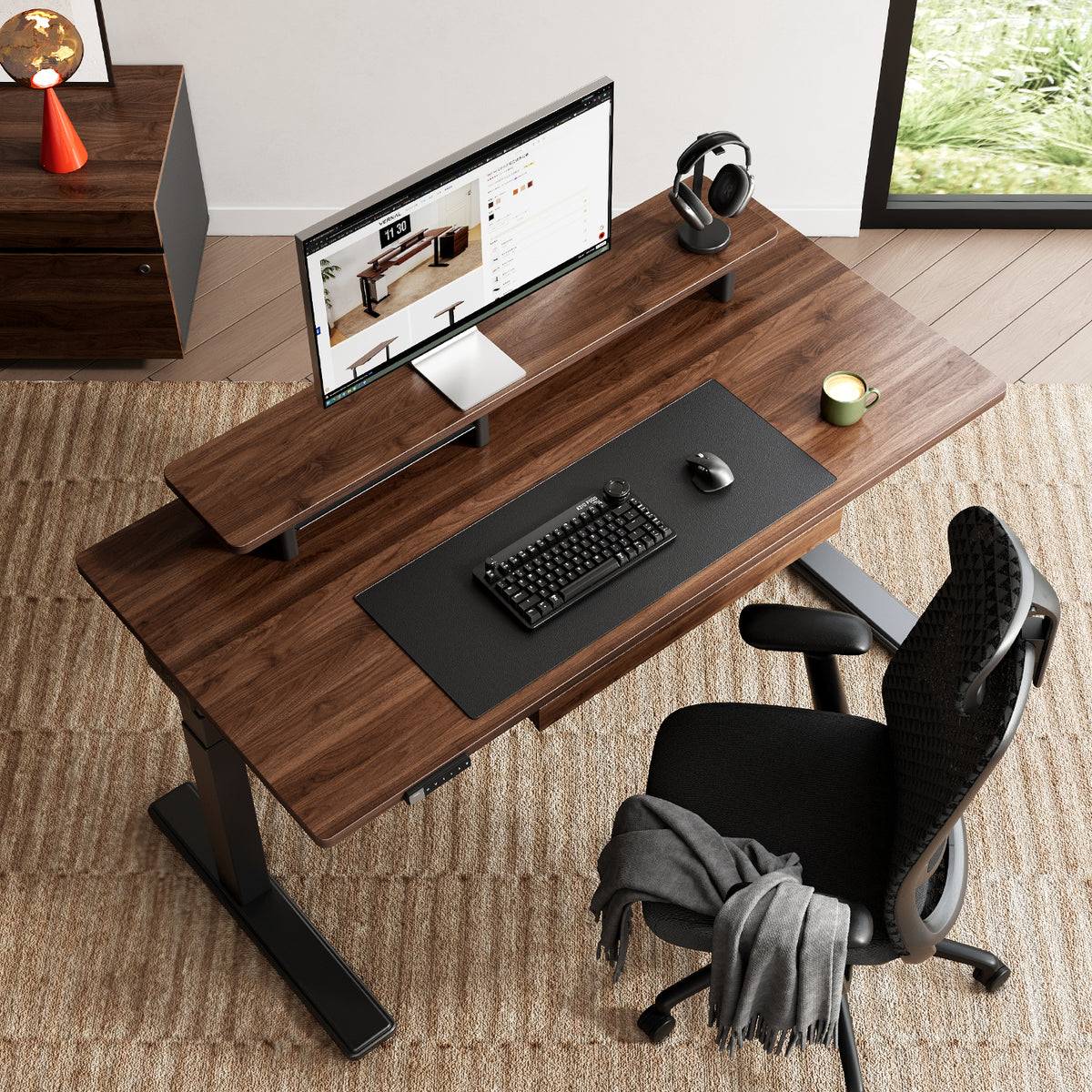
Every morning, Luke sits down by the window overlooking the city. Before diving into his first coding session, he has already designed the environment that will shape his entire day.
Luke spends up to 14 hours a day writing code, editing videos, and building ideas from his apartment in Finland. But when he redesigned his workspace, the goal wasn't to create a more impressive setup — it was to create a space where work and life could finally feel balanced.
Meet Luke: A Software Engineer Who Creates More Than Code
For Luke, productivity is not only about having the right tools or following the right routines. The environment around him plays an important role in how he approaches his work.
A workspace can influence how easily we focus, organize our thoughts, and move through the day. This idea connects with the concept of the “extended mind,” introduced by philosophers Andy Clark and David Chalmers, which suggests that the environments around us can become part of the way we think and work.
In Luke's case, his workspace is designed around one simple idea: remove unnecessary distractions and create room for better thinking. From the layout of the room to the way he organizes his desk, every detail reflects this approach.
"Having a cluttered workspace feels the same to me as working in a noisy environment," Luke explains.
For Luke, a clear environment is not just about aesthetics, it is about creating the conditions where focused work and creativity can happen.

When Work and Life Share the Same Space
Working from home brings freedom, but it also creates a unique challenge:
How do you create separation between professional focus and personal relaxation when both happen in the same room?
Luke experienced this firsthand.
"It's easy to fall into that trap where you kind of lose the separation between work and "me time" when working from home."
Instead of treating his desk as just a workstation, Luke wanted his workspace to feel like a natural part of his home.
The goal was not to create an isolated office.
It was to create an environment where work and life could exist together without competing with each other.
Designing Around the Environment, Not Just the Desk
One of the most noticeable parts of Luke's workspace is its connection to the outside world.
Placed near a window overlooking both a peaceful lake and the movement of the city, his setup was designed to create moments of pause throughout the day.
For Luke, the view is not just decoration.
It is part of how he resets his mind.
"Just staring at a monitor all day can cause eye strain, so being able to focus my eyes on something further away helps a lot."

Why Cable Management Matters More Than People Think
Among all the details in Luke's workspace, cable management might seem like a small one.
But for him, it represents something bigger:
A workspace should feel effortless.
In previous setups, Luke relied on zip ties to organize his cables.
At first, they solved the problem.
But whenever he changed equipment or added something new, the system became difficult to maintain.
"I would have to re-do the zip ties and it was a whole mess."
A better workspace should allow change.
That is why having a dedicated cable management solution became an important part of his setup — keeping the workspace clean while allowing flexibility over time.

The Value of Movement: Why Flexibility Matters During Long Workdays
Although Luke uses his desk primarily while seated, he does not see a standing desk as something that requires standing all day.
For Luke, the value of a standing desk is not about replacing sitting with standing. It is about creating more freedom within the workday.
After long periods of sitting, he notices his energy starts to decrease.
That is when movement becomes valuable.
"After hours of sitting down I start to feel quite sluggish, so something I like doing is standing up during my meetings."
Standing during meetings helps him feel more engaged and energized.
A Workspace That Adapts to the Way You Work
Working from home means one space often needs to support different parts of your day. For Luke, that flexibility became an important part of how he designed his workspace.
When he is working or creating content, Luke moves his desk closer to the window, where he can look out over the lake and the city. The open view gives him a stronger connection to his surroundings, creating a sense of openness during long periods of editing, planning, and focused work.
When he wants to relax or disconnect, he moves the desk closer to the wall in his bedroom. The more enclosed position creates a quieter atmosphere, giving him a more private space to unwind.
Environmental psychologist Jay Appleton described this human preference as "prospect and refuge" — our desire for spaces that allow us to explore the outside world while still feeling comfortable and protected.
For Luke, a workspace does not need to stay in one fixed position. It should adapt to different moments, supporting creativity when inspiration is needed and creating focus when distractions need to disappear.

Your Workspace Is a Reflection of How You Live
A great workspace is not defined by how much equipment it contains.
It is defined by how well it supports the person using it.
For Luke, that means creating a space that reduces distractions, encourages creativity, and allows work and life to coexist.
The goal is not to create a workspace that looks perfect. It is to create one that feels natural — one that supports the way you actually work, think, and live.
A workspace should evolve as we do. Because the best setups are not built around what we own. They are built around who we are becoming.

- Regular price
-
£34.99 - Regular price
-
£69.99 - Sale price
-
£34.99
- Regular price
-
£129.99 £219.99 - Regular price
-
- Sale price
-
£129.99 £219.99